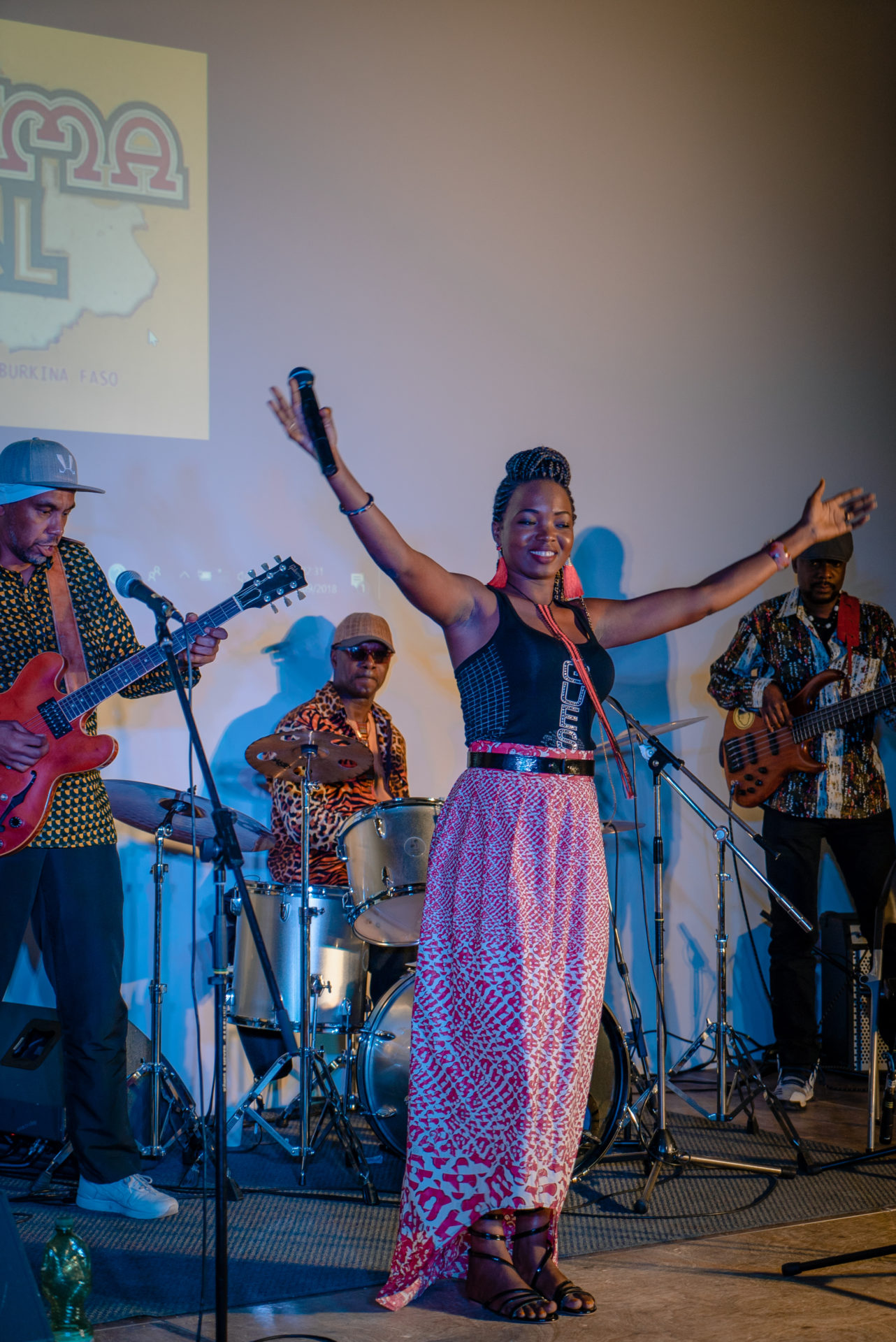
The Woka Kuma Festival is an annual intercultural festival held in Berlin that is dedicated to promoting art, culture, and music from Burkina Faso and fostering social exchange with Burkina Faso. The festival is organized by the non-profit association Woka – Kuma Deutschland e. V., which is committed to cultural cooperation between Burkina Faso and Germany. The name Woka Kuma means “hand in hand” and programmatically describes the festival’s mission: encounters on equal terms, solidarity, and mutual learning.
The festival sees itself as an open platform for contemporary and traditional forms of expression from Burkina Faso and the African diaspora in Berlin. The program includes concerts, dance and music performances, workshops, discussion panels, exhibitions, as well as market and meeting formats. Artists, activists, and cultural creators engage in direct exchange with the Berlin audience. In addition to artistic performances, social issues such as identity, migration, cultural heritage, and global responsibility are also addressed. Culinary offerings and participatory formats further promote informal encounters and a communal festival experience.
The impact of the Woka Kuma Festival lies particularly in its cultural, social, and educational dimensions. It contributes to strengthening the visibility of Burkinabe and African cultures in Berlin’s cultural scene and consciously counteracts stereotypical images of Africa. Direct exchange between artists, diaspora communities, and a diverse audience creates sustainable networks and new forms of cultural cooperation. At the same time, the festival offers people from the Burkinabe diaspora an important space for identification, self-representation, and community. Beyond its artistic framework, the Woka Kuma Festival thus contributes to intercultural understanding, cultural education, and social solidarity in a pluralistic city like Berlin.
Activities such as Afro Contemporary dance workshops with star dancers Ahmed Soura and Serge Some, or discussion events on the realities of life for women and artists from Burkina Faso and Germany, bring these cultural excerpts to life for the diverse audience. The festival also includes cultural education dance workshops in schools and daycare centers, allowing artists from Burkina Faso to pass on and share their skills.